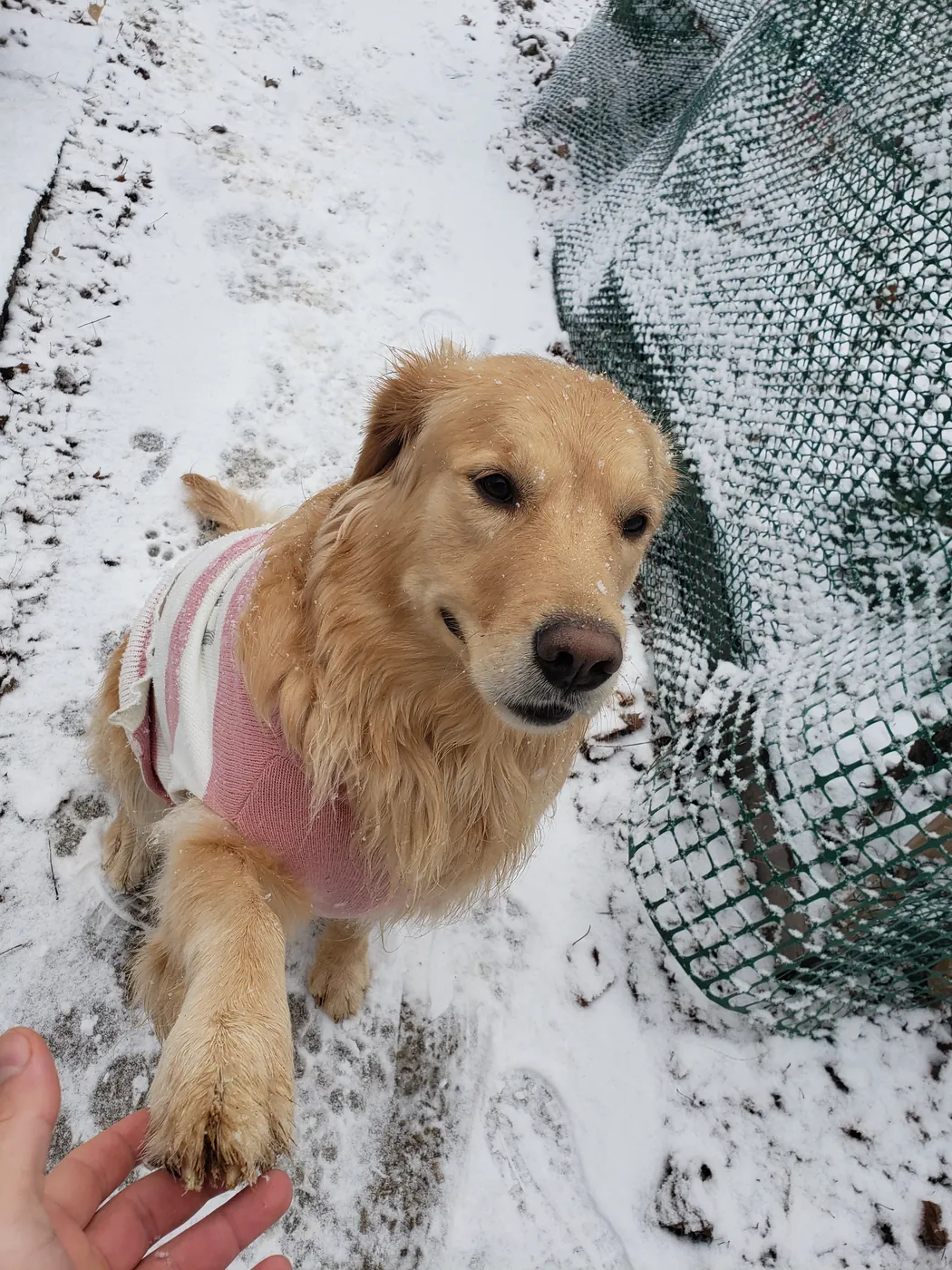
Cold, wind, ice, and treated sidewalks make winter walks a different job. There is no single safe temperature for every dog, so the goal is to fit each outing to your dog and the day, look after their paws, and head home before the cold becomes a problem.
The short version
Shorten or skip the walk when conditions are beyond your dog’s comfort, keep paws away from salt and chemicals, wash and check them afterward, and call your veterinarian or animal poison control right away if your dog may have swallowed ice melt or antifreeze.
Check today's conditions
Walking weather planner
Quick reminders
Hot weather
Cold weather
Before you go
- Check the temperature, wind, precipitation, and sidewalk conditions.
- Fit the route and length to your dog’s size, coat, age, health, and cold tolerance.
- Use a secure, well-fitted collar or harness with current identification.
- Bring a towel, waste bags, a charged phone, and water for longer outings.
Protect the paws
- Use booties or a veterinarian-approved paw protectant before the walk.
- Steer around salt piles, treated slush, and chemical residue where you can.
- Afterward, wash and dry the feet and belly, including between the toes.
- Check for cracked pads, redness between the toes, ice balls, or persistent licking.
Choose a safer winter route
Footing
- Favor cleared, well-lit paths.
- Slow down on driveways, steps, bridges, and shaded corners where black ice lingers.
Visibility
- Darkness comes early, so wear reflective gear and carry a light.
- Keep the leash short near traffic.
Control
- Keep dogs leashed around snow and ice.
- Snowbanks can hide hazards, and scents are harder to follow.
Ice melt and antifreeze
Ice-melting products can irritate paws and make dogs sick when licked off or swallowed. Products labelled pet-friendly can be gentler, but they are not harmless to eat. Antifreeze containing ethylene glycol can be deadly in small amounts. Store products out of reach, clean up spills right away, and consider antifreeze made with propylene glycol instead.
Know when to head home
End the walk if your dog shows that the cold is too much. Move indoors, dry and warm them gradually, and call your veterinarian if the signs do not settle or you are worried.
- Repeatedly lifting paws or limping
- Shivering
- Slowing down or refusing to continue
- Anxiety or searching for shelter
Make the most of short-walk days
On the worst days, a quick bathroom break followed by indoor enrichment can be the kinder choice. Try a puzzle feeder, a sniffing game with a few hidden treats, or a short training session. Loyal Leash adjusts each visit and route to your dog and the conditions, and we will tell you what changed in the visit update.
Common questions
How cold is too cold to walk my dog?
Does my dog need a coat?
Is pet-friendly ice melt completely safe?
Sources & further reading
Planning care around this?